South of England 27-28 August 2023
Jurassic coast: Durdle Door
We spent the August bank holiday at the South Coast. It's a long drive from York, so we had never travelled that far south before. Now we have relatives in Oxford, and the journey can be split into two days: three hours to Oxford and the same time to the sea.
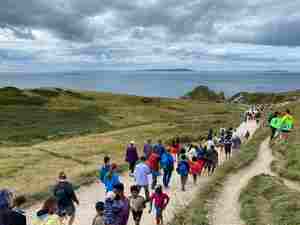
We parked in a large field where there were already many cars and even more people. There was a queue of people heading towards the sea.
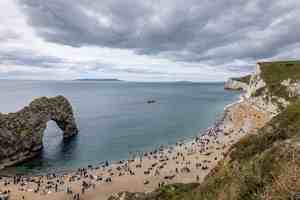
Judging by the number of people, this is a popular place. The descent to the beach was quite steep, so some people did not go down, but it was still hard to walk down the beach without stepping on anyone. It reminded us of Black sea beaches.
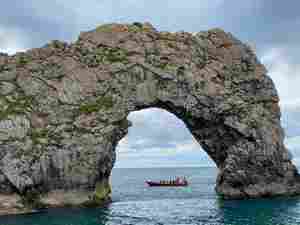
This limestone arch is called Durdle Door.
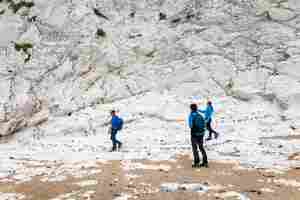
Chalk cliffs are peppered with flint.
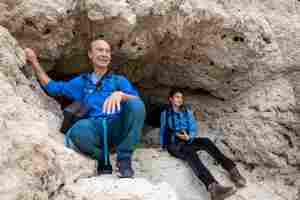
There are many shallow caves in the rocks. We were told off for climbing into them.

The further we got away from Durdle Door, the fewer people we saw.
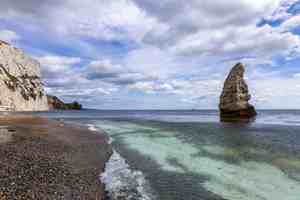
A stack at the end of the bay. The sun came out and we went for a swim. The water was surprisingly warm, noticeably warmer than in the North Sea.
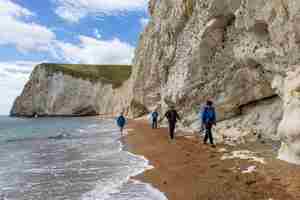
After a swim and lunch, we headed back. A small hole in the rock is Bat's Hole.
The crowds around Durdle Door were still there. Zoom in on this picture to see how many people crowded into such a small area.
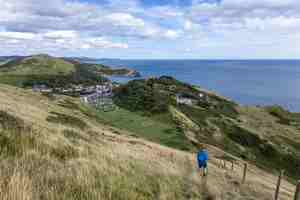
We followed the path along the cliffs towards Lulworth Cove (the small bay with the sailboat in this picture) and stopped at the Stair Hole.
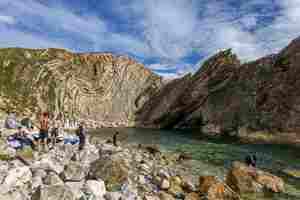
The Stair Hole is enclosed by a ridge of rocks and arches. It's a natural wonder.
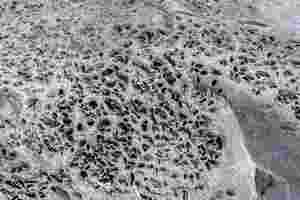
This porous stone is probably limestone.
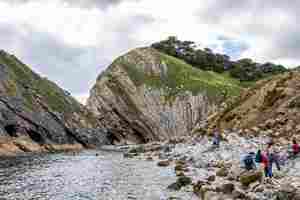
Curved layers on the opposite cliff. The main "exit" to the sea is directly below it.
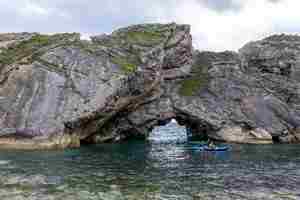
We swam through this arch into the open sea.
Cerne Abbas
We stopped at the small village of Cerne Abbas to see another wonder of the world. This virtually deserted place (compared to Durdle Door) was pretty: old cottages and the remains of an abbey.

A local pub in an autumnal setting.
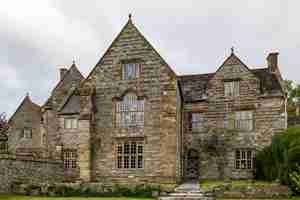
The remains of the abbey. Many houses here are clad in sandstone and decorated with bands of flint, almost like chalk cliffs on the sea.
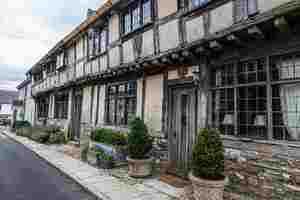
A row of medieval houses.
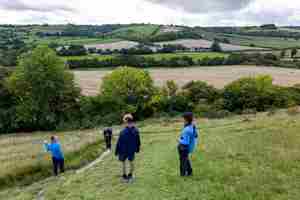
We came here to see the famous Cerne Abbas Giant - a 55 metre high figure of a man carved into the hillside. We came almost right up to it (the figure is now protected by a fence), but we couldn't see anything from here. Then we looked at it from the car park at the bottom of the valley. We couldn't see it very well either.

A bird's eye view, however, is just like the pictures on the internet.

We spent the night at a campsite near Cheddar and even had a campfire.
Cheddar Gorge
Cheddar Gorge is the deepest limestone gorge in England. We walked along one side of it, down into Cheddar, back up the other side and then drove along the bottom of the gorge.
The blue line shows our track. Shift-click on the track link will open it in nakarte.me.
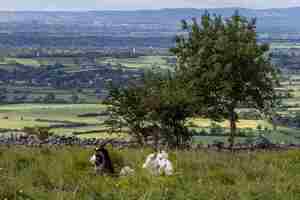
In England, most farm animals are sheep, but here there were many goats. In the distance you can see the mouth of the River Severn.
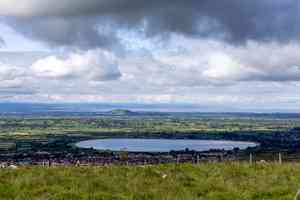
Cheddar Reservoir is shaped like a tea saucer.
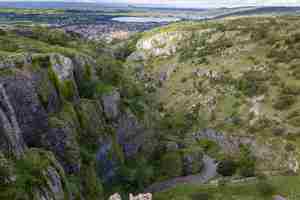
The gorge ends right in the town of Cheddar. A road runs along the bottom of the gorge.

At its deepest point it is more than 130 metres tall. The cliffs on the southern side are steep, but on the other side you can climb them. The town of Cheddar did not impress us. We had lunch there and walked back along the north side.
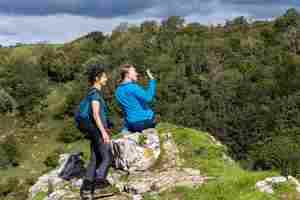
A ledge.
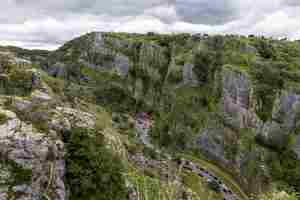
A view of the gorge from the way back.

An amphitheatre. The rocks are easy to climb, but one has to be careful.
Caves
There is a commercial cave at Cheddar Gorge, but we went looking for wild caves and found a few!
The blue line shows our track. Shift-click on the track link will open it in nakarte.me.
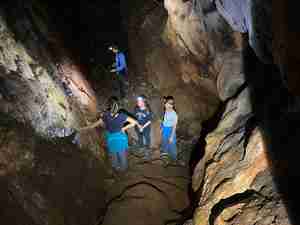
We peeked into every cave on the map, but most were potholes and a rope was needed to get into them. The last one, Goatchurch Cavern, was walkable and big. We spent some time exploring it.
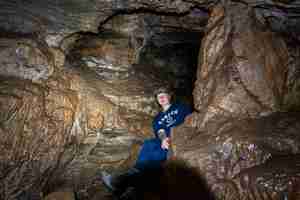
With the torches, you can see the stalactites and stalagmites and all sorts of buildup on the walls.
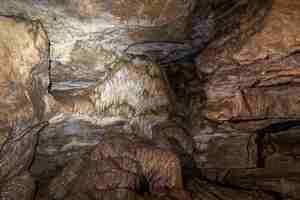
The ceiling is covered in glitter.
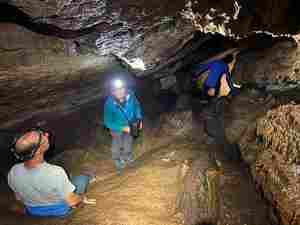
There was no-one but us! But we had to go back - first to Oxford and then to York.
It's a long way to the south of England, but it's worth the occasional trip. It felt like we travelled to a different country. Everything here was different: the nature, the architecture, the crowds.


