Croatia 23-26 October 2021
1 ← Previous Next → 2 3 4
Day two. Mala Paklenica gorge.
We spent our second day in Paklenica national park. This is only an hour's drive from Zadar.
The blue line shows our track. Shift-click on the track link will open it in nakarte.me.
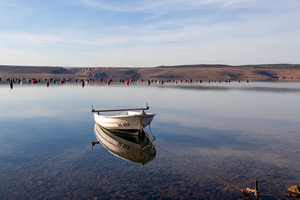
Before going to the national park, we stopped at the seaside.
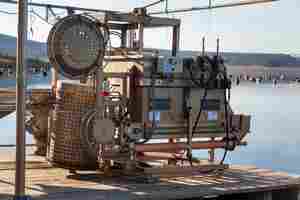
A mussel processing machine at the pier.
Bright floats at the mussel farm.

This place resembles Scotland beaches. Calm sea, clear water, no people around - what else could one wish for?
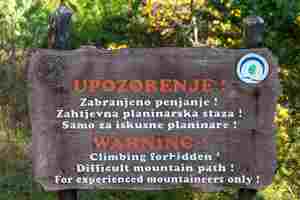
There was only one other car at the head of the trail. This warning did not put us off.

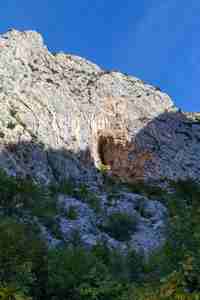
The mountains here rise almost straight from the seaside. The first ridge is about 700 m high, and the next one is over 1700 m. We are approaching the Mala Paklenica canyon.
 |
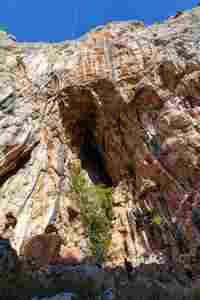 |
We got to the entrance of a large cave but could not get any closer.
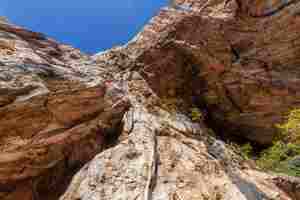
The height of the cave was certainly impressive.
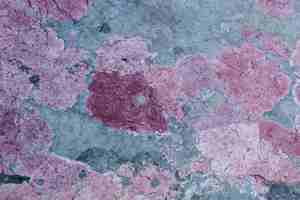
Some rocks were covered with pink lichen.
 |
 |
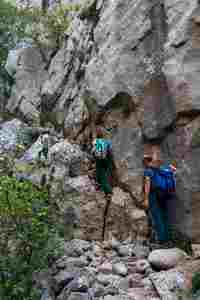
The path mostly followed a dry riverbed but sometimes went on rocky walls of the valley. There were cables in places but the rocks were easy to climb without using them.
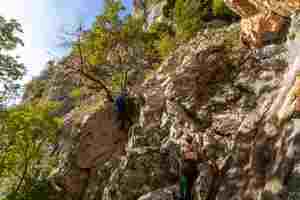
We tried to get to another cave. The steepest climb was protected by a rope, but we decided not to take chances and returned to the main path.

Bright orange and black rocks contrast with green leaves.
 |
 |
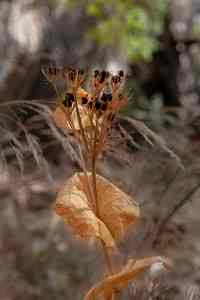
Round-Leaved Alexanders (Smyrnium rotundifolium Mill). |
Inula verbascifolia (Willd.) Hausskn. |
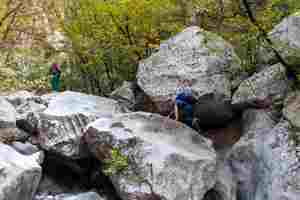
Large boulders polished by the river.
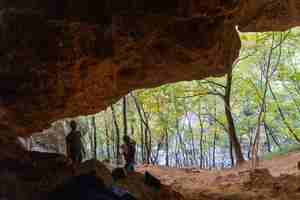
This cave was right next to the path, it was even signposted as a source of water. This was indeed the only source of water in the whole canyon. The water droplets falling from the roof of the cave collected in a small pool by the entrance.

It took us some time to properly explore the cave. We made good use of our head torches.

This formation resembles a giant ear.
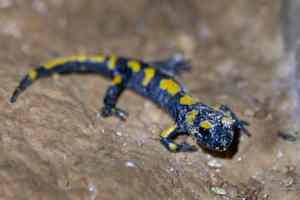
Sonya spotted a salamander. It was really tiny, only about 5 cm long.
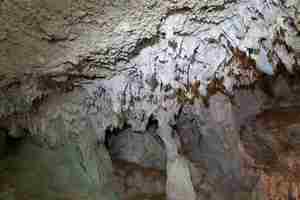
A pillar is formed where a stalactite meets a stalagmite. We enjoyed this cave so much because we were there on our own. We only saw two people in the canyon.

Round leaves of the smoke tree (Cotinus coggygria Scop).

The gorge ended and the path followed the dry riverbed surrounded by the beech trees.
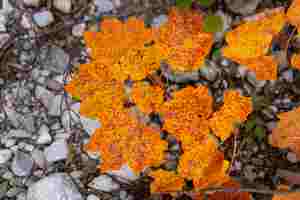
Sycamore leaves (Acer pseudoplatanus).
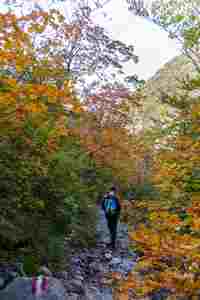
Here the path leaves the riverbed and climbs up the wooded slope.
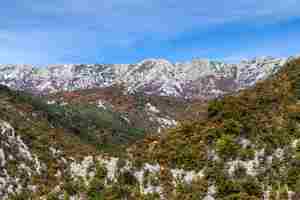
An amazing view of the other mountain ridge.
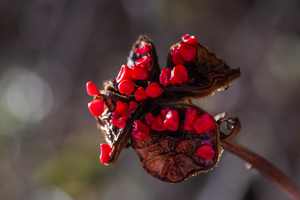
Paeonia broteroi Boiss. & Reut. or Paeonia clusii.
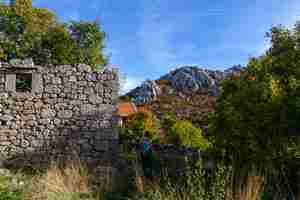
A dilapidated house. One of the outbuildings was clearly still inhabitable, but where do the residents get water from?
The grey limestone rocks are surrounded by autumnal colours.
We are descending towards the sea.
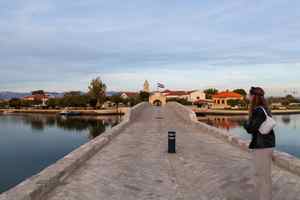
Before going home, we stopped in the old town of Nin. There was a Roman settlement here. The town is surrounded by water; two bridges connect it with the dry land. With no locals and no tourists in the evening, we found ourselves in a ghost town.
 |
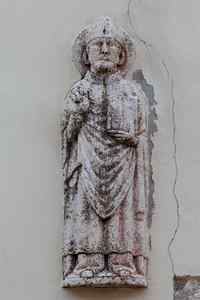 |
Two statues by the entrance to the Church of St Anselm in the centre of Nin.
 |
 |
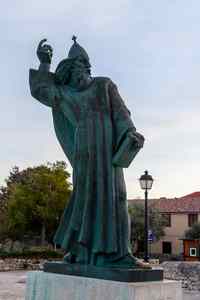
Grgur Ninski statue. |
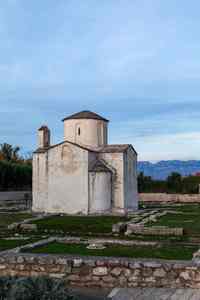
The Church of the Holy Cross (IХ century) only measures 8×8 m. It was nicknamed the smallest cathedral in the world. |
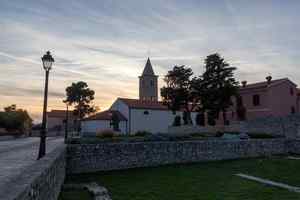
Sunset in Nin.
1 ← Previous Next → 2 3 4


